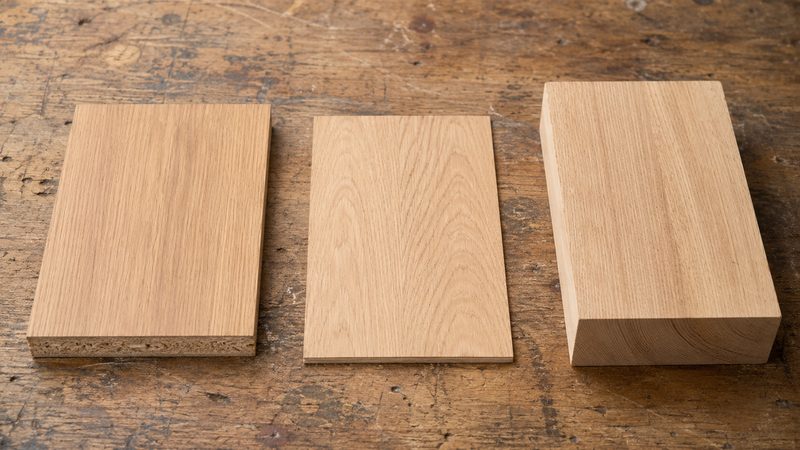
Material choice is one of the first decisions in any carpentry project — wardrobe, kitchen cabinet, or feature wall — and it's also one of the most confusing, since "laminate," "veneer," and "solid wood" get used loosely in showrooms and online listings. Here's what each actually is, how they compare, and which makes sense for different parts of a Singapore home.
What each material actually is
Laminate / Melamine
A synthetic surface — typically a printed decorative layer fused under heat and pressure onto a substrate like particleboard or MDF. It comes in an enormous range of colours, textures, and wood-grain patterns. This is the most common material used in Singapore carpentry, both HDB and condo.
Veneer
A thin slice of real wood (usually 0.3–0.6mm) glued onto a substrate like plywood or MDF. It gives genuine wood grain and texture at a fraction of the cost and weight of solid wood, since only the visible surface is real timber.
Solid wood
Wood all the way through — no substrate, no veneer layer. Rare in modern Singapore built-in carpentry except for specific accent pieces, because of cost, weight, and how much it moves with humidity changes.
Side-by-side comparison
| Factor | Laminate | Veneer | Solid Wood |
|---|---|---|---|
| Relative cost | Lowest | Mid | Highest |
| Humidity stability | Best | Good (if sealed) | Most prone to movement |
| Scratch resistance | Good | Moderate | Moderate |
| Visual authenticity | Imitation | Genuine wood grain | Genuine wood grain |
| Repairability | Limited (replace panel) | Can be sanded lightly | Can be sanded/refinished |
| Best for | Cabinet bodies, wet zones | Feature panels, accent pieces | Small statement elements |
Where each material makes sense
Cabinet bodies and wardrobe interiors
Laminate, almost always. It's not the visible "feature" of the piece and durability matters more than appearance for interior shelving and cabinet boxes.
Wardrobe and cabinet door fronts
Either laminate or veneer depending on budget and desired look. Laminate wood-grain finishes have improved enough that many homeowners are satisfied with the look at a lower price point. Veneer is worth the upgrade if you want genuine wood texture you can feel, not just see.
Feature walls and accent panels
This is where veneer shines — a TV feature wall or display shelving unit benefits from the visual depth and texture of real wood grain, and the smaller surface area keeps the cost increase manageable.
Wet zones (under-sink cabinets, bathroom vanities)
Moisture-resistant laminate specifically — not standard laminate, and generally not veneer or solid wood unless properly sealed and rated for moisture exposure.
Not sure which material fits your project?
Send us photos of your space and we'll recommend the right material mix for your budget and use case.
WhatsApp UsThe bottom line
Most well-designed Singapore homes mix materials rather than picking one for the whole project — laminate for cost-effective, durable cabinet bodies, with veneer or a premium finish reserved for the surfaces you actually look at and touch. This gets you the visual upgrade where it matters without paying a premium on every cabinet box in the house.