How Long Does an Aircon Last in Singapore?
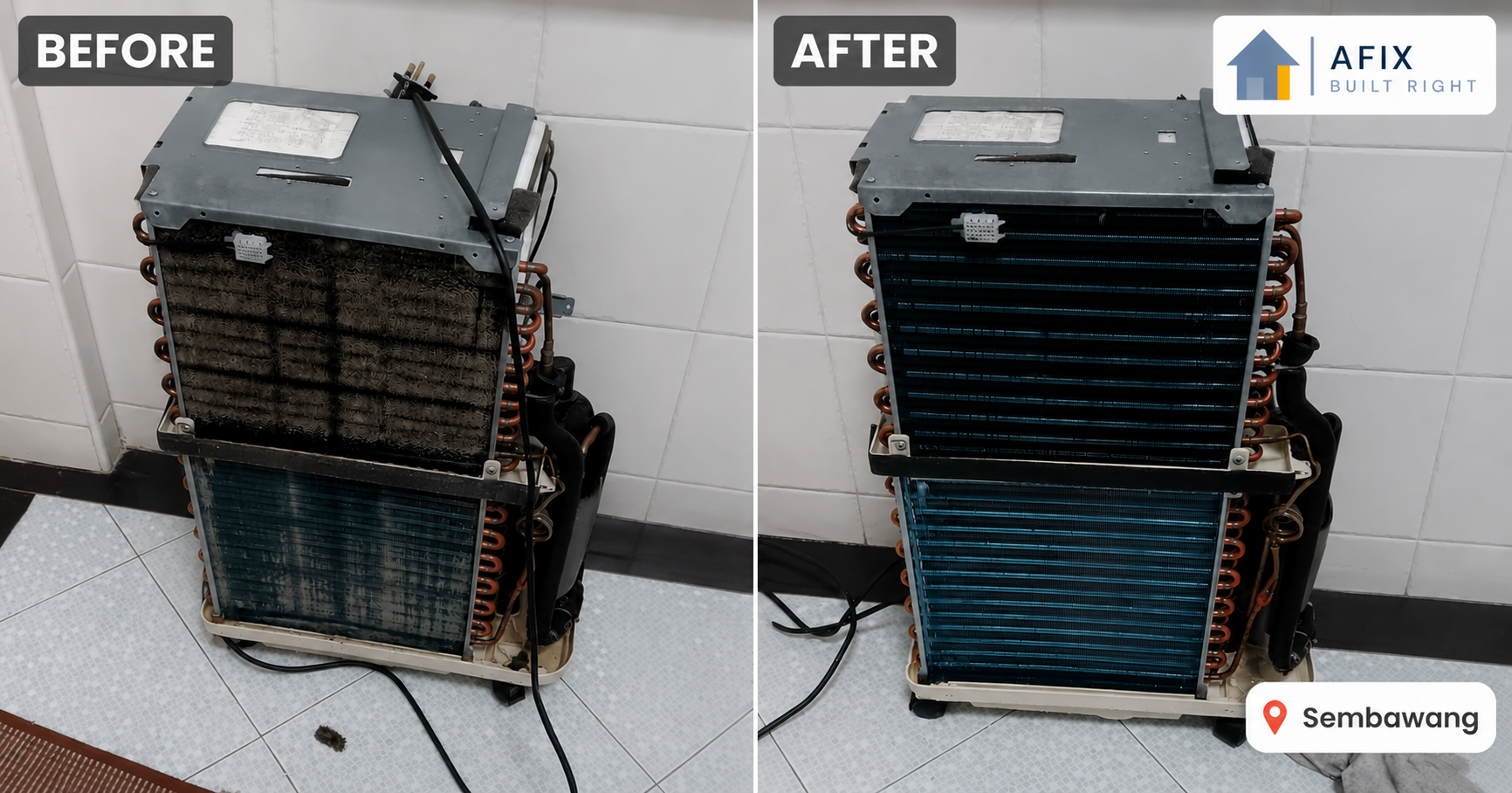
The honest answer: anywhere from 7 to 15+ years, depending almost entirely on how well it's been maintained. We regularly service units that are 14 years old and still cooling properly. We also see units barely past 8 years that are already uneconomical to repair.
Here's what actually determines lifespan — and how to tell when replacement makes more sense than another repair.
Expected lifespan by maintenance level
| Maintenance level | Typical lifespan | What happens |
|---|---|---|
| Well-maintained (3-monthly service + annual chemical wash) | 12–15+ years | Coil stays clean, compressor runs efficiently, drain clear |
| Occasionally serviced (once a year or less) | 9–12 years | Gradual coil fouling, refrigerant leaks go undetected longer |
| Rarely or never serviced | 6–9 years | Compressor works harder against fouled coil, fails earlier |
The compressor is the most expensive component and the one most affected by poor maintenance. A dirty coil forces the compressor to run at higher pressure and temperature for years — that's what shortens lifespan. Compressor replacement typically costs $500–$900, which on a unit older than 10 years rarely makes economic sense.
What Singapore's climate does to your aircon
Singapore is harder on aircons than most countries. Units here run 6–12 hours a day on average — far more than the intermittent use typical in temperate climates. That's 2,000–4,000 operating hours per year, versus 800–1,200 in a country with actual seasons.
On top of that, our humidity creates ideal conditions for mould growth on the coil and biological fouling in the drain system. Both accelerate component wear when left unaddressed.
What this means practically: a Singapore aircon that's "10 years old" may have run as many hours as a 20-year-old unit in a cooler country. Age alone is less useful as a guide than condition.
Signs your aircon is nearing end of life
- Frequent breakdowns — if you're calling a technician more than once a year for different issues, the unit is aging out
- Cooling performance declining despite recent service — a serviced unit that still doesn't cool well usually has compressor or refrigerant system degradation
- Refrigerant keeps depleting — if you're topping up refrigerant every 6–12 months, there's an unfixable or uneconomical leak
- Compressor makes new sounds — grinding, rattling, or high-pitched whining from the outdoor unit signals compressor wear
- Electricity bills rising without usage change — a degraded compressor draws significantly more power to achieve the same cooling
- Repair cost approaching 50%+ of replacement — at this point, you're spending money to delay the inevitable
The 50% rule for repair vs replace
A useful rule of thumb: if a single repair costs more than 50% of a replacement unit's price, replace instead. A basic 1-horsepower split-type unit costs $800–$1,200 installed. So if a repair quote comes in at $500+, replacement is worth serious consideration — especially on a unit over 10 years old.
The calculation changes if the unit is still under warranty, or if it's a premium inverter unit (Daikin, Mitsubishi Electric) where the replacement cost is significantly higher.
How to extend your aircon's lifespan
This is straightforward. The habits that extend lifespan are the same ones that keep your unit cooling efficiently:
- Service every 3 months — keeps the filter clear, drain flushed, and coil inspected. Catches small problems before they become expensive ones.
- Chemical wash once a year — removes mould and biological buildup from the coil and blower that standard servicing can't reach. Prevents the coil fouling that stresses the compressor.
- Don't ignore refrigerant loss — a slow leak that's caught and fixed at the 2-year mark costs far less than the compressor damage that results from years of running low.
- Keep the outdoor unit clear — ensure at least 50cm of clear space around the condenser. Blocked ventilation raises operating temperature and accelerates compressor wear.
- Don't set temperatures extremely low — setting to 16°C doesn't cool the room faster, it just makes the compressor run continuously at maximum load. 24–25°C is sufficient for most Singapore homes.
Not sure if your unit is worth repairing or due for replacement? Message us with the brand, model, and what's happening — we'll give you an honest assessment.
WhatsApp AFIXFrequently asked questions
We cover all major areas in Singapore — no travel surcharge anywhere.